Schools

Research has shown that pet ownership can be particularly beneficial for children: from teaching them responsibilities and about the cycle of life, to providing companionship and building confidence. Having a pet around the home can make a big impact and theming activities around pets can also be a great way to engage children in the classroom.
Making pets the subject in the classroom
We are delighted to have been working with Marc Abraham, TV vet, author, and animal welfare campaigner to develop downloadable resources to use during lesson time. Our ‘Keeping Pets Healthy’ lesson plan will help children aged 4-7 (Reception and KS1) understand the importance of caring for animals and others. To accompany the session, you will also need a set of baby and adult animal images for the first game. Here are some examples of images of adult and baby animals – you might want to use similar ones in your lesson. Individual images are available in the Supporters’ resource section – log in to view and download.
National Pet Month teaching is all about easy to do lesson plans that can be executed during National Pet Month. They are designed for early years and primary school children.
At the heart of every lesson is a guide to being a responsible pet owner and ideas to get the pupils involved in National Pet Month even if you do not wish to fundraise.
Not all the lesson plans need to be done in the classroom, the worksheets and fun activities can be given as homework.
NEW! Keeping Pets Healthy – lesson plan for vets and schools.
 Art
ArtIdeas include:
- T-shirt painting
- encouraging children to explore the library and learn more about their favourite pets and draw them
- Paper animal mosaics, a fun activity for children which can be displayed in the classroom during National Pet Month
- Design a poster to illustrate one of the National Pet Month Top 10 Tips for responsible pet ownership
- Draw or paint a happy pet
- Design and make a pet mask
Look out for National Pet Month’s schools art competitions!
 English
- How to write a review from a pet’s point of view, also includes fundraising ideas.
- Harvey’s Big Adventure, incorporating National Pet Month’s Top 10 tips for responsible pet ownership
- Top Ten Tips
(For more information and frequently asked questions take a look at the Pet Health Council web site)
- Think carefully before getting a pet and learn about its special requirements.
- Ensure your pet is sociable and well trained.
- Provide a nutritious and well balanced diet.
- Provide suitable housing and bedding.
- Clean up after your pet and worm it regularly.
- Protect against disease. Your vet can provide you with advice.
- Prevent unwanted litters and neuter your pet when appropriate.
- Groom your pet regularly.
- Control your pet and ensure it is properly identified.
- Take out pet insurance for dogs, cats and horses to cover against unexpected veterinary fees and third party liability.
 Sport
Sport
- Dog Tag, playground fun during National Pet Month
- What Time is it Mr Cat? More playground fun that also encourages counting!
Homework
- Children’s worksheets - Click on the pictures below, print them
off and use them in your class.
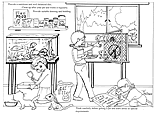
- Which animal can be kept as a pet? A fun five minute activity
- Mathematics problems
For more information see www.peteducationresources.co.uk
"Placing companion animals in school curricula encourages the moral, spiritual and personal development of each child, bringing social benefits to the school community and enhancing opportunities for learning in various areas of the school curriculum" Rio Declaration of the International Association of Human Animal Interaction, Rio de Janeiro, 12 September 2001.
There has long been an association between man and animals and over the past 30 years, scientists have become increasingly
interested in the notion that "pets are good for you". Research has found that pets do promote a general
feeling of well-being, and it is well known that happy children tend to be healthier children.
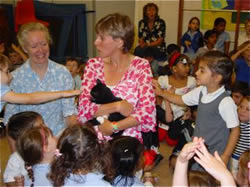 All parents and teachers know the enthusiasm and engagement that animals can produce in children. Many school communities are enriched by this knowledge, introducing pets into schools in a number of imaginative
and practical ways. Pet clubs, pet assemblies or pet days can help to nurture an understanding of life and the
responsibilities of animal welfare in the individual child and the school as a
whole. Pets can also provide a fun route into many curriculum areas.
All parents and teachers know the enthusiasm and engagement that animals can produce in children. Many school communities are enriched by this knowledge, introducing pets into schools in a number of imaginative
and practical ways. Pet clubs, pet assemblies or pet days can help to nurture an understanding of life and the
responsibilities of animal welfare in the individual child and the school as a
whole. Pets can also provide a fun route into many curriculum areas.
Animals fascinate children. Recent studies have shown that this interest can facilitate learning, have a positive effect on child development and be harnessed to improve human and animal welfare. Many diverse, sometimes surprising benefits have been recorded, both for mainstream children and for those with special needs. The therapeutic and educational benefits have been identified as follows:
School pets have been found to:
- motivate pupils to think and to learn, as children have a high level of natural interest, enthusiasm and enjoyment of animals
- encourage a respect and reverence for life in pupils and thereby improve their relationships with other pupils, parents and teachers
- foster a sense of responsibility in children
- teach children to nurture and respect life
- lead to the development of hobbies / careers in animal care
- improve academic achievement
Teachers have also found therapeutic benefits for children with special needs. For example:
- a calming effect on pupils, particularly those with behavioural or learning difficulties; improving behaviour and concentration, reducing stress and improving self-esteem
- encouraging expression and participation in more withdrawn children
- animals can help when working with the most vulnerable children
- educational improvements with low achievers
Pets in schools also have social benefits for the school community:
- enhance the learning environment, creating a sense of security and family warmth for the pupils
- encourage the involvement of parents and the wider community in school activity
- help to promote the school as an important nurturing influence in the community
- reduce the incidence of truancy, vandalism and conflict through fostering a greater sense of community
Our essential tips on incorporating pets into school life responsibly
- Involve a local veterinary surgeon in selection, assessment and care of pets
- Prepare a written care plan for each animal
- Obtain well socialised young animals from a reputable source
- "Quarantine" the pets at the teacher's home for 2 weeks prior to introduction for further observation of behaviour and health
- There is a Duty of Care to provide the 5 Welfare Needs of Pets, as set out in the 2006 Animal Welfare Act
- The need for a suitable environment
- The need for a suitable diet which includes fresh water at all times
- The need to be able to exhibit normal behaviour patterns
- The need to be housed with, or apart from, other animals as required
- The need to be protected from pain, suffering, injury and disease
- Ensure that each animal enjoys an optimum environment, in social groups, if appropriate. Keep same sex animals, breeding often leads to welfare problems
- Routine preventive health measures should be practised as advised by the vet - vaccination of dogs, cats, rabbits; flea prevention and worm control
- Keep pets and their quarters clean and ensure that wild animals cannot get to the pets
- Feed a high quality diet, as recommended by the vet. Dogs and cats must never be given raw or undercooked meat. A reputable, quality prepared petfood is best.
- All school pets should have an annual health check
- Children should wash hands after handling
- Any sick animals should be promptly isolated and examined by a vet
- Make careful arrangements for holiday and weekend care and provide comprehensive written care guidelines. These should include advice on recognising signs of ill health and the vet's phone number.
- Know what is expected to be achieved through animal interaction - prepare written educational goals
Any involvement of animals in schools must promote good practice in animal care. It is very important that children are taught correct procedures in handling and caring for animals, and a school pet provides an opportunity to do this.
Children should be encouraged to take a shared responsibility for the care of the animals, under direct supervision. They should only be given tasks appropriate to their ability. Encouragement and praise are important. At all costs, children must be helped not to fail, or feel inadequate in their pet care duties. Standards of care must be high - children learn through observation.
 What if the pet is ill?
There must be total commitment to any animal that becomes ill. Sometimes the economic value of animals can be less than the cost of veterinary treatment; but animals should never be euthanased to cut costs. If animals are hospitalised during treatment, frequent progress reports should be given to the children. Children identify very closely with animals and the purpose of pet keeping is to instil a sense of responsibility and teach them how to care.
What if the pet dies?
The death of a pet provides an opportunity to discuss death and dying. Many children will have experienced pet loss and some the loss of relatives. Discussion about pet loss should be encouraged. Do not to refer to euthanasia as "putting to sleep" or "being given an anaesthetic" or children may develop fear of sleep or anaesthesia.
 Can pets cause health problems?
Possible hazards include zoonoses, allergies and injuries. These will be minimised through the adoption of a planned pet keeping policy. Long-term studies have shown that the incidence of such problems is very low.
- Most infections that can be acquired from animals cause minor skin problems. However, healthy animals do not transmit diseases - diseases from other people pose a greater risk
- Allergies can be caused by a variety of allergens, including house dust mites, pollen, mould spores, fabrics, foodstuffs and animal dander. Washing hands after handling animals will usually prevent symptoms, or reduce their severity. Close contact with animals is usually required to cause a reaction. People with an animal allergy are often only allergic to one species, most commonly cats or rabbits. Rarely, a severe allergy may preclude the presence of an animal in the classroom
Bites and scratches - sociable animals are not likely to bite or scratch unless frightened or handled roughly. Children should be taught how to gently interact with the animals.
Pets in schools can:
- result in lessons that are more interesting, lively, spontaneous and memorable
- support general environmental education and offer cross-curricular links
- enhance opportunities in many specific curriculum areas :
Science
 Pets can be used in the study of many areas specified in the National Curriculum scheme of work for Science at Key Stages 1 and 2. For example, sound and hearing in year 1; health and growth, animals and plants in the local environment, and variation in year 2; teeth and eating, and moving and growing in year 3; keeping healthy and life cycles in year 5; interdependence and adaptation and micro-organisms in year 6.
Personal and Social Education
In addition to the moral and spiritual benefits, aspects of human health, safety and behaviour can be discussed in an absorbing, yet non-threatening way, by using pets as a metaphor for humans.
Creative Arts
The presence of animals stimulates creative work - such as art, essays, poems, public speaking and drama.
Pets can also encourage teachers to teach animal welfare and conservation, and an education which encourages children to develop consideration for people, animals and the environment. Topics can include any facet of the human-animal bond including caring for others, feelings and emotions. There is an emphasis on taking responsibility for one's actions and children are encouraged to respect others as they develop a better understanding of their needs.
Deciding to get a resident school pet
Caring for animals requires dedication and commitment - this is an important lesson for the children, so careful planning is necessary before introducing resident animals into schools. The cost of keeping the animal needs to be calculated, and a decision made on how the costs will be met.
Local veterinary practices should be contacted for advice on suitable species and should be able to provide or recommend useful resources on their care. Animals should be assessed by a veterinary surgeon for health, temperament and behaviour prior to being introduced to the school.
Careful research must be undertaken into the requirements of any species being considered as a pet. Each school should develop a written policy on animals in school and an individual care plan for each resident animal.
During National Pet Month there are many ways in which schools can get involved. You can invite in an expert or raise money for their local pet charities whilst instilling responsible pet ownership to children for example:
- Fancy dress day, pay 50p to dress as your favourite pet for the day, and give the money to a local pet welfare charity
- Invite in a local expert such as a vet, vet nurse, someone from a local pet rescue centre to talk to the class
- Don’t forget to register your event with National Pet Month, and let us know how you got on
For further guidance please follow this link which will direct you to the event page.

Campaign run by…